









June 08, 2026
From “Love Letters” Across Time to Smart Education: How AI Is Writing a New Chapter for Chinese Language Education in Southeast Asia

In the film Dear You, one yellowed family letter after another traces bonds of affection across time and distance. Language has never been merely a tool—it sustains family bonds, carries memories, and bridges divides.
In Thailand today, Chinese is taking on a role far more practical and wide-ranging than that of a “love letter.” As more Chinese companies establish operations in the country and economic and trade ties between China and Thailand continue to deepen, demand for Chinese-speaking professionals has grown rapidly. In a recent interview with China Education Television, Thai Minister of Education Prasert Jantararuangtong identified language cooperation as a key area of cooperation between the two countries, noting that proficiency in Chinese has become an essential skill for young people in Thailand.
With extensive experience in AI-powered Chinese language education worldwide, iFLYTEK is using artificial intelligence to address key challenges in Chinese language education overseas and make high-quality learning resources more accessible. AI Chinese is now in regular use at multiple schools across Thailand and has expanded to other ASEAN countries, becoming an important driver of the digital transformation of Chinese language education in Thailand.
Addressing Key Challenges: AI Drives Teaching Transformation
In Thailand, the number of Chinese language learners continues to grow, yet they face three longstanding challenges: difficulty speaking Chinese, limited access to timely pronunciation feedback, and a lack of authentic language-use environments. Meanwhile, a severe shortage of qualified Chinese teachers leaves students with limited opportunities to practice in traditional classroom settings and places a heavy instructional burden on teachers.
Powered by a large model designed specifically for Chinese language education, iFLYTEK’s AI Chinese creates an intelligent, end-to-end solution across every stage of the learning journey—from teaching and learning to practice, assessment, and management.
For lesson preparation, the system can rapidly convert a wide variety of teaching materials into digital courseware and automatically generate accompanying exercises, helping solve the challenges of limited resources and time-consuming test design. In the classroom, interactive features such as gamified levels and friendly competitions make Chinese lessons more engaging and immersive. For speaking practice, it creates AI-powered immersive dialogue scenarios, with a dedicated 24/7 AI language partner that enables learners to practice anytime and helps bridge the gap created by limited real-world language exposure. On the management side, the system automatically produces learning analytics reports, pinpoints individual knowledge gaps, and supports more targeted instruction and efficient administration. It also integrates full-scale HSK mock tests and targeted resource packages to help learners focus on weak areas and improve exam performance through more structured preparation.
Together, these six core capabilities are reshaping Chinese language education in Thailand, ushering in a new model of teaching that is more efficient, more precise, and more engaging.
Validated in Real Classrooms: From Hesitant Learners to Confident Speakers
Since its launch in Thailand, the AI Chinese has delivered impressive results across multiple pilot schools, backed by measurable data and visible transformation in immersive classroom experiences.
In terms of speaking improvement, Thepsirin Samut Prakan School in Samut Prakan Province introduced the AI Chinese Smart Teaching System and, within just seven weeks, broke through the problem of classroom silence, fostering a positive learning cycle in which students are willing to speak, speak more often, and speak more effectively. After 37 weeks of normalized and in-depth use at Blue Lotus School in Samut Prakan Province, AI-powered speaking practice has become integrated into daily teaching. Students’ accuracy in initials and finals pronunciation improved significantly, with overall pronunciation standardization rising by more than 30%, while classroom interaction and engagement were notably revitalized.
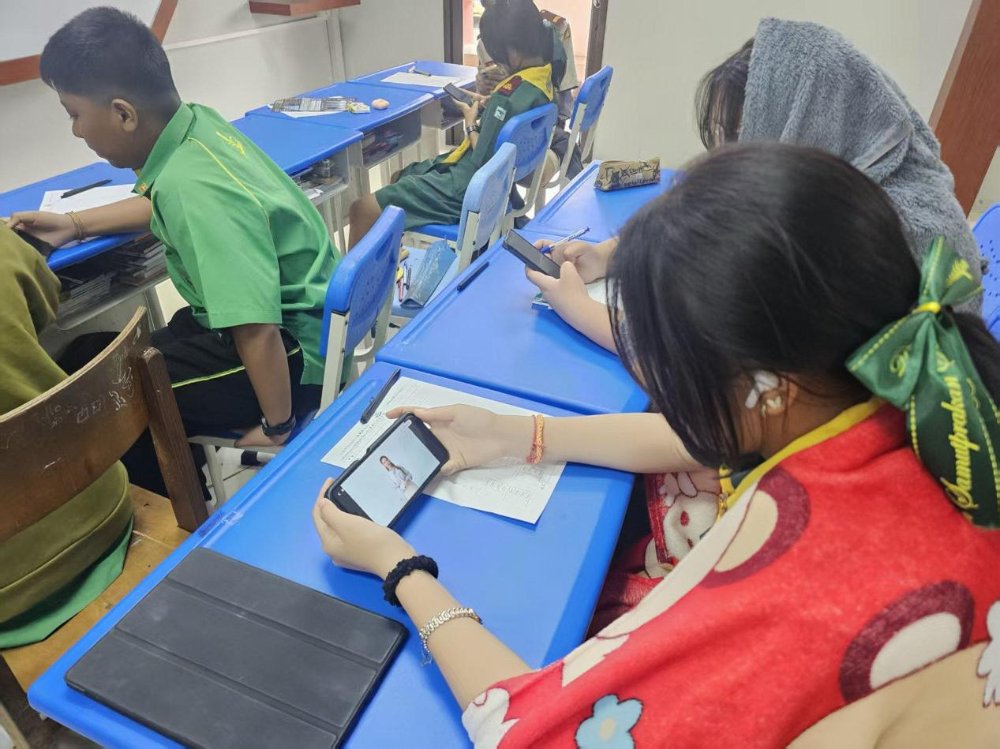
At Khon Kaen Public Overseas Chinese School, intelligent lesson-preparation tools have helped reduce teachers’ lesson-planning time from more than 2.5 hours per class to just six minutes, significantly easing workload while improving teaching quality. Meanwhile, students have shown marked gains in their ability to use Chinese in practical contexts. The school has also delivered AI-powered Chinese demonstration lessons for education authority supervisors and welcomed teacher delegations from Bangkok for classroom observation and professional exchange, offering a hands-on model of AI-enabled teaching that can be observed, learned, and replicated.

For efficient HSK preparation, Wat Nuan Chan School in Bangkok adopted AI-powered HSK intensive training and, through a model combining short-term boot camps with targeted skill reinforcement, helped students with limited prior foundations make the leap to high-score passes in HSK Level 1. At Mahathai Catholic School in Khon Kaen Province, AIGC-based customized HSK fast-track courses have created an immersive “learn-as-you-practice” classroom experience.
Co-Building an Educational Ecosystem to Help Chinese Language Learning Bloom Across ASEAN
The strong on-campus results have earned high recognition from Thailand’s education authorities, while exchanges between the two sides have continued to deepen, outlining a new vision for China–Thailand educational development:
March 2025: A former Thai Minister of Education visited the Suan Kulap Confucius Classroom and highly praised such innovative applications as AI-enabled classroom interaction and real-time pronunciation correction in Chinese teaching.
May 2025: Thailand’s Minister of Education visited iFLYTEK’s exhibition hall and invited the team to Buriram Province to deliver specialized training for Chinese language teachers, helping bring AI-based teaching concepts directly to frontline educators.
July 2025: Several schools, including Wat Nuan Chan School in Bangkok and Thepsirin Samut Prakan School in Samut Prakan Province, signed strategic cooperation agreements with iFLYTEK, marking the launch of normalized multi-school implementation.
September 2025: The Chinese Language Development Center of Samut Prakan Province partnered with iFLYTEK to build an AI Chinese demonstration zone covering multiple schools in the area, setting a benchmark for large-scale adoption.
April 2026: Dr. Suthep Kaengsanthea, Permanent Secretary of Thailand’s Ministry of Education, met with Wang Zhanglong, Vice President of iFLYTEK, and his delegation. Both sides agreed to deepen exchanges and cooperation in areas such as smart classroom co-development, AI competency training for teachers, and localized curriculum development. That same month, Sarnsuksa Samut Sakhon School and Thepsirin Samut Prakan School were officially inaugurated as demonstration schools for AI-powered smart Chinese classrooms, marking the project’s shift from single-site pilots to scaled deployment.
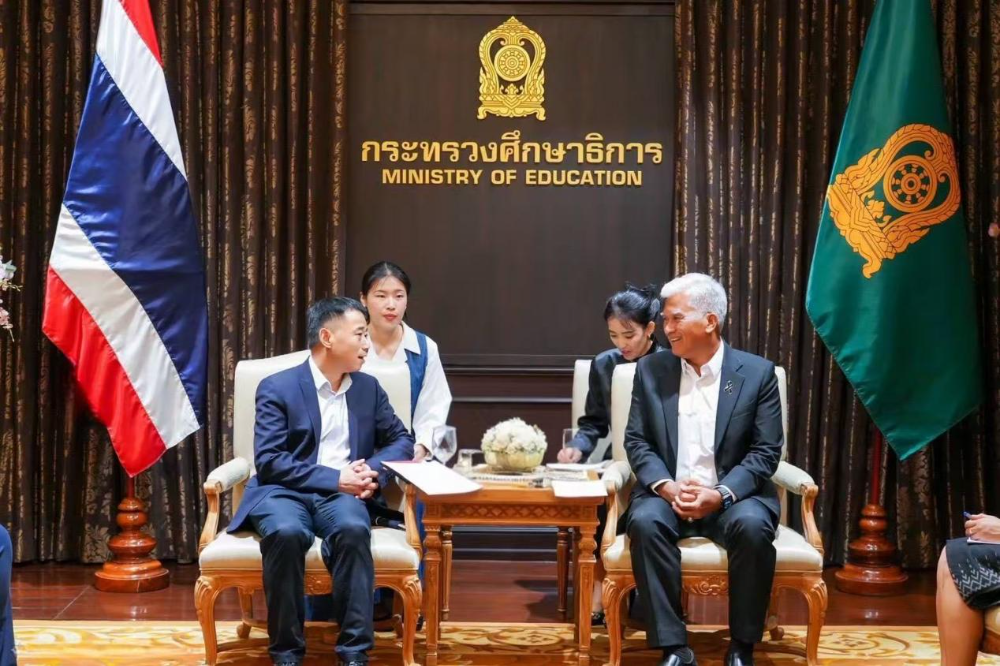
May 2026: Thai Minister of Education Prasert Jantararuangtong led a delegation to iFLYTEK’s Zhejiang headquarters, where both sides conducted in-depth exchanges on Chinese language teaching, AI literacy education, and the digitalization of vocational education, aiming to advance cooperation to a new stage.
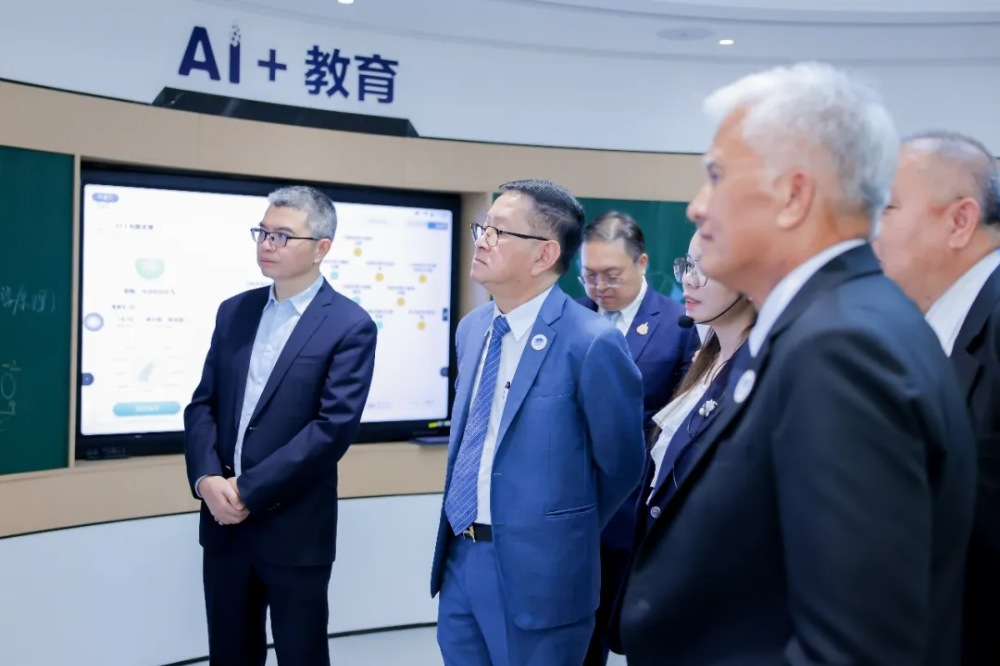
In Thailand, iFLYTEK is doing more than introducing products; it is committed to building a sustainable, localized ecosystem for Chinese language education. Through regular specialized teacher training, the company has nurtured a group of dedicated core teachers who actively apply AI in their teaching, while also developing replicable school-based teaching practices. To align with Thailand’s mainstream textbooks, iFLYTEK has simultaneously created customized AI courseware, synchronized lessons, and exercise banks, ensuring a seamless fit between technology and local classroom needs. With Thailand serving as a flagship model, iFLYTEK’s AI Chinese teaching approach has already expanded to educational institutions across ASEAN, including in Indonesia, Malaysia, and Vietnam.
Looking ahead, iFLYTEK will continue to build on the momentum of China–Thailand language cooperation policies and harness its core technologies to expand the matrix of demonstration schools, enhance teacher capacity-building, and enrich localized educational resources, helping Thailand nurture more versatile talents proficient in Chinese and well-versed in Chinese culture.
More News
-

 AI Empowering Bilingual Communication | Campus Tour Launches for the 4th Global Youth Bilingual Broadcast Announcing and Anchoring Contest
April 02, 2026
-
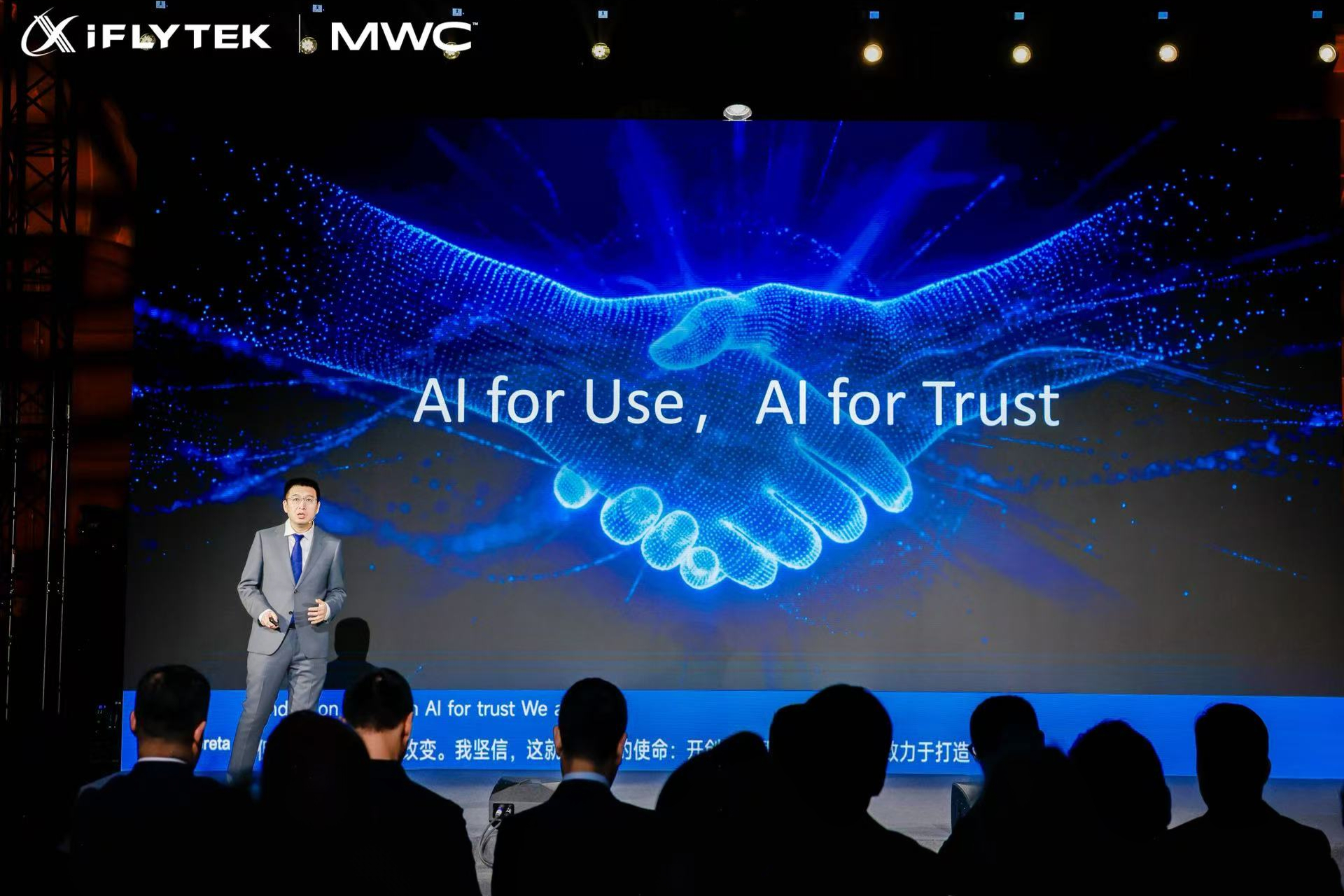 iFLYTEK Debuts AI Glasses and New AI Devices at MWC26, Advancing "AI for Use, AI for Trust"
March 05, 2026
-
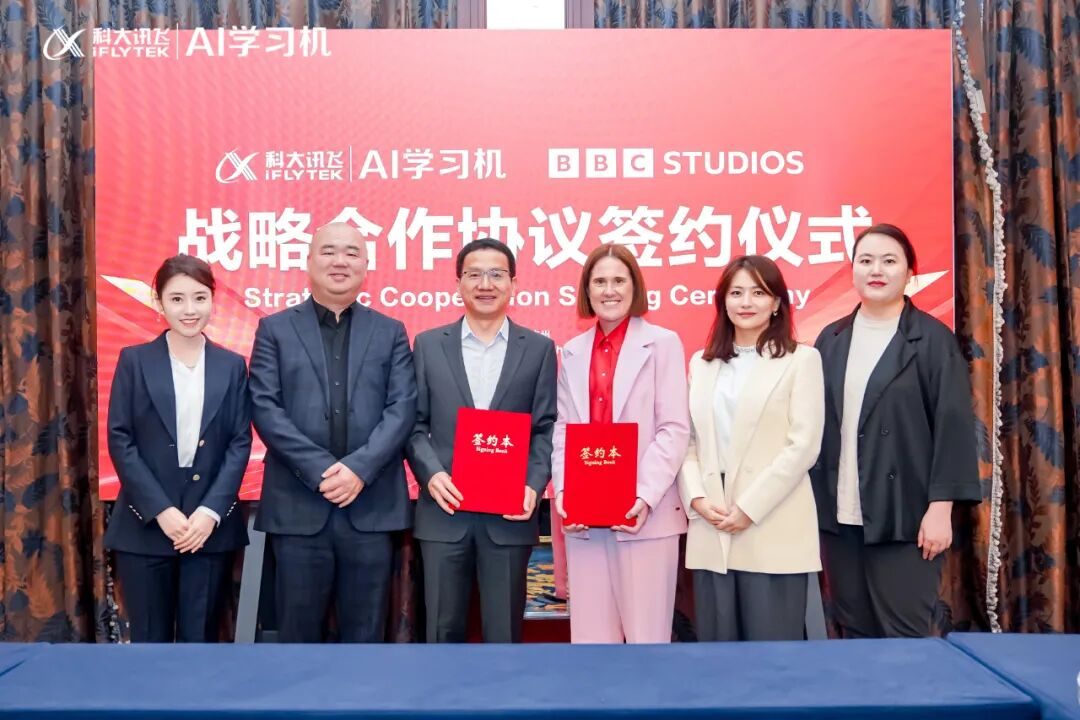 Industry First: Bluey and Other Classic English Animations Launch Exclusively on iFLYTEK AI Learning Machine
January 14, 2026
-
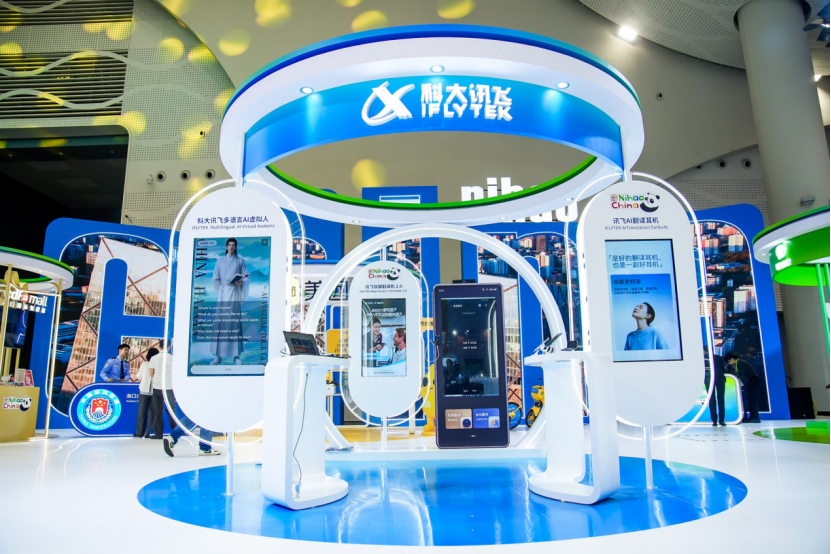 iFLYTEK Showcases at the 2025 China International Travel Mart
January 08, 2026
-
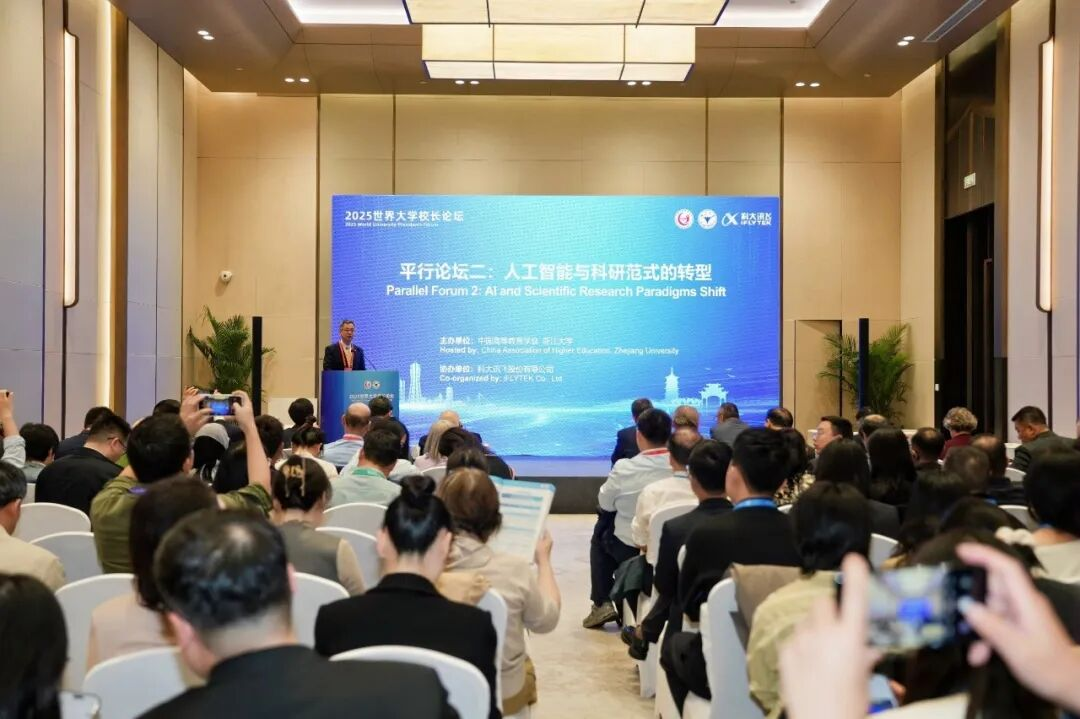 2025 World University Presidents Forum Hosts "AI and Scientific Research Paradigms Shift"
November 25, 2025
-
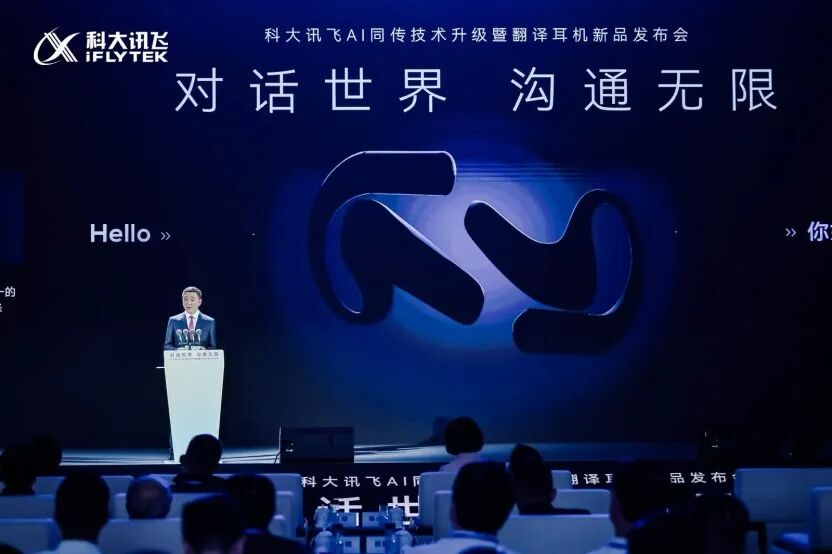 iFLYTEK Upgrades Simultaneous Interpretation Model and Launches iFLYTRANS Headsets in Shanghai and Dubai
October 31, 2025
-
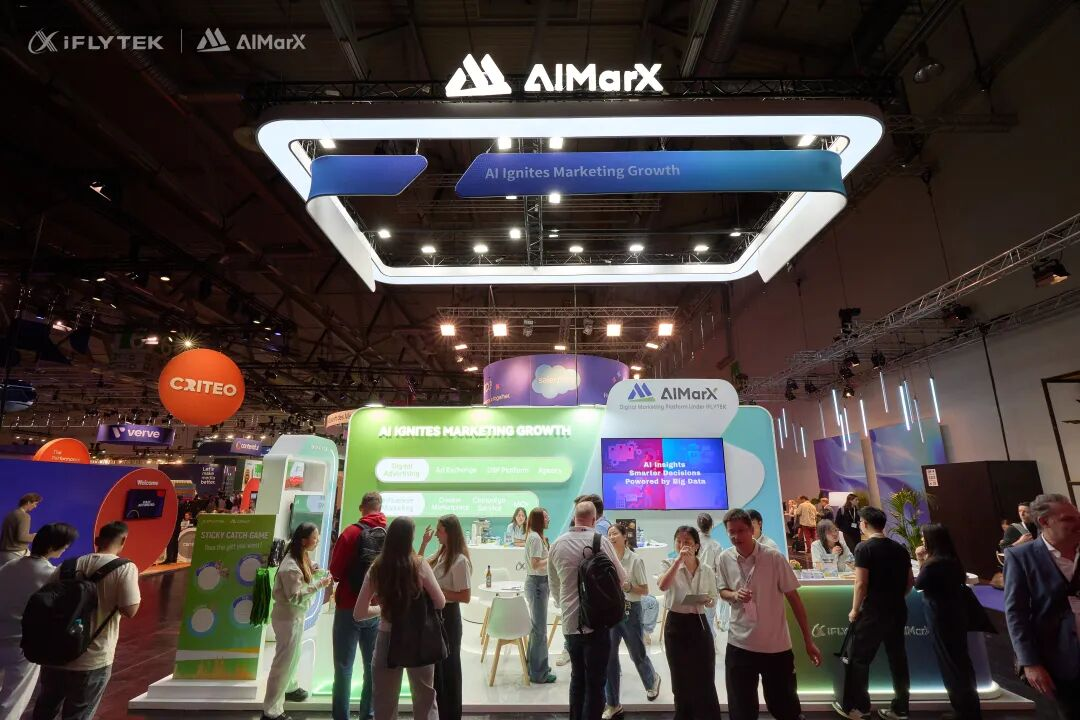 Spotlight on DMEXCO 2025: Join iFLYTEK AI Marketing to Shape the AI-Driven Future of Digital Marketing
October 22, 2025