













November 25, 2025
2025 World University Presidents Forum Hosts "AI and Scientific Research Paradigms Shift"
The 2025 World University Presidents Forum (WUPF), co-hosted by the China Association of Higher Education and Zhejiang University, was held on November 8 at the Hangzhou International Expo Center. The event received support from the UNESCO Regional Office for East Asia (UNESCO Beijing) and the World Federation of United Nations Associations (WFUNA), with co-sponsorship from the National Academy of Education Administration, the Open University of China, Higher Education Press, and iFLYTEK. Focusing on the theme "Artificial Intelligence and the Future of Higher Education," the forum brought together nearly 1,000 representatives, including 167 guests from over 40 countries and regions across five continents. This group included more than 70 presidents from prestigious international universities, over 20 leaders from major international organizations, nearly 20 academicians, and over 200 secretaries and presidents from Chinese universities.
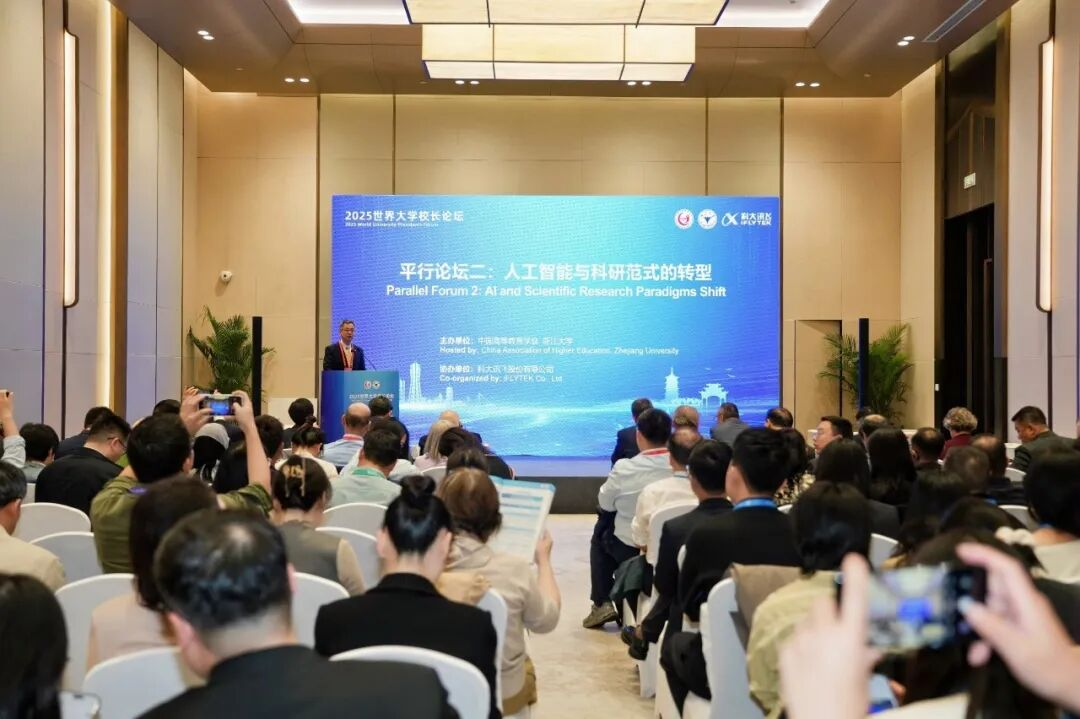
The rapid advancement of artificial intelligence (AI) is fundamentally reshaping the landscape of scientific research, pushing the boundaries of human knowledge, and driving a radical shift in scientific paradigms. With its formidable capabilities in data processing and analysis, AI efficiently manages massive, high-dimensional datasets, enabling the focused allocation of scientific resources to address critical issues vital to human development. Higher education institutions are crucial to the deep integration of AI into scientific research. In response, China's Ministry of Education has implemented a series of initiatives to advance talent cultivation, technological innovation, research and development (R&D), and the commercialization and application of research outcomes. To maximize the impact of higher education in navigating this transformation of research paradigms, it is essential to pool the collective wisdom of universities worldwide and the unified efforts of all sectors of society. This requires deepening exchanges and cooperation, taking decisive action, fostering an environment conducive to innovation, proactively addressing risks and challenges, and exploring effective pathways for AI-driven changes in research paradigms.
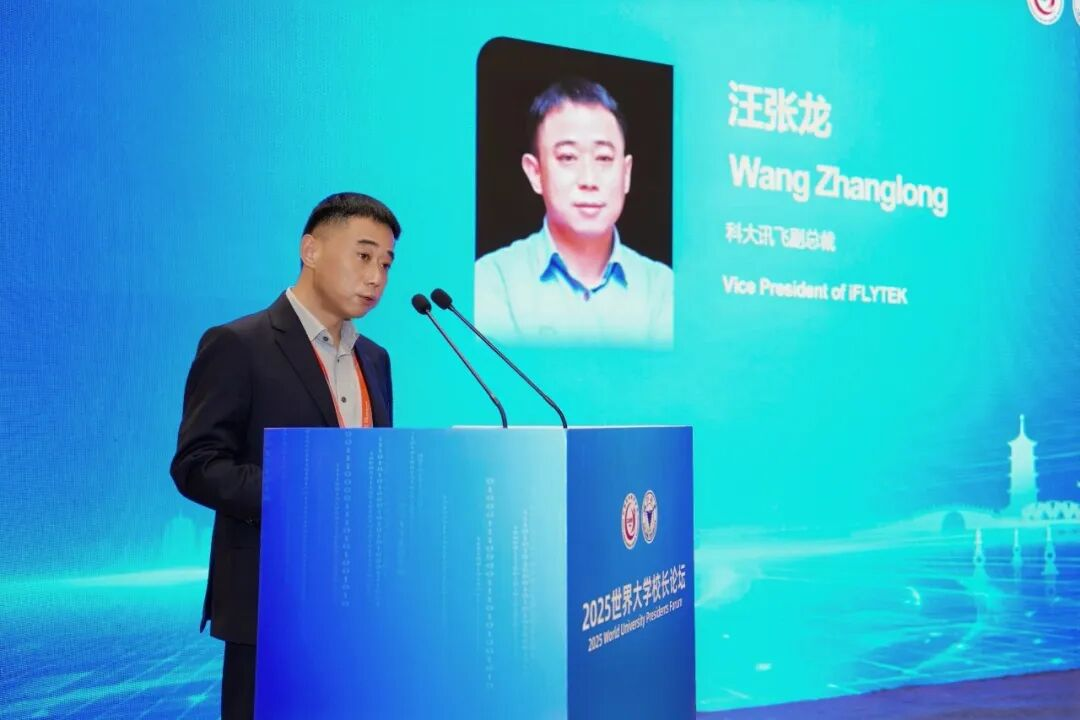
iFLYTEK Vice President Wang Zhanglong stated in his address that general artificial intelligence, exemplified by large models, is currently undergoing leapfrog development. Relying on the State Key Laboratory of Cognitive Intelligence," iFLYTEK is continuously advancing the iteration and upgrade of the Spark Large Language Model (LLM). In the education sector, iFLYTEK has partnered with the China National Institute of Educational Sciences to create an educational large model, and is collaborating with multiple universities to build disciplinary large models, such as Wuhan University of Technology's (WUT) "Materials+" Large Model and China University of Geosciences' (CUG) "Proterozoic Large Model," driving the deep application of these models in university research. For research empowerment, iFLYTEK has joined forces with the National Science Library, Chinese Academy of Sciences (CAS), to develop the "Scientific Literature Large Model" and "SPARK Research Assistant 3.0," serving over 135,000 researchers, and has achieved substantial progress in the field of AI for Science. Finally, he called on universities and enterprises to collaborate in building domain-specific large models around key disciplines, integrating multilingual AI into global education, strengthening AI ethics and educational governance, and leveraging AI to advance educational digital transformation and the paradigm shift in scientific research, thereby jointly constructing a new ecosystem for global higher education characterized by "human-machine collaboration and mutual progress."
Wang Shijin, Vice President of iFLYTEK and Executive President of iFLYTEK Research Institute, highlighted two main approaches for AI to empower scientific research: deep learning-based modeling of scientific tasks and large models facilitating research innovation. He detailed iFLYTEK's innovative achievements in biotechnology and scientific instruments, as well as the applied success of the SPARK Research Assistant—developed with the National Science Library, CAS and based on a large model for scientific literature—in serving researchers. He stated that iFLYTEK is actively collaborating with universities to build large disciplinary models, promoting the deep integration of AI with fundamental disciplines. Furthermore, the company is developing large models for scientific knowledge deduction in fields like chemistry and chemical engineering, aiming to propel AI from an "auxiliary tool" to a critical "research partner."
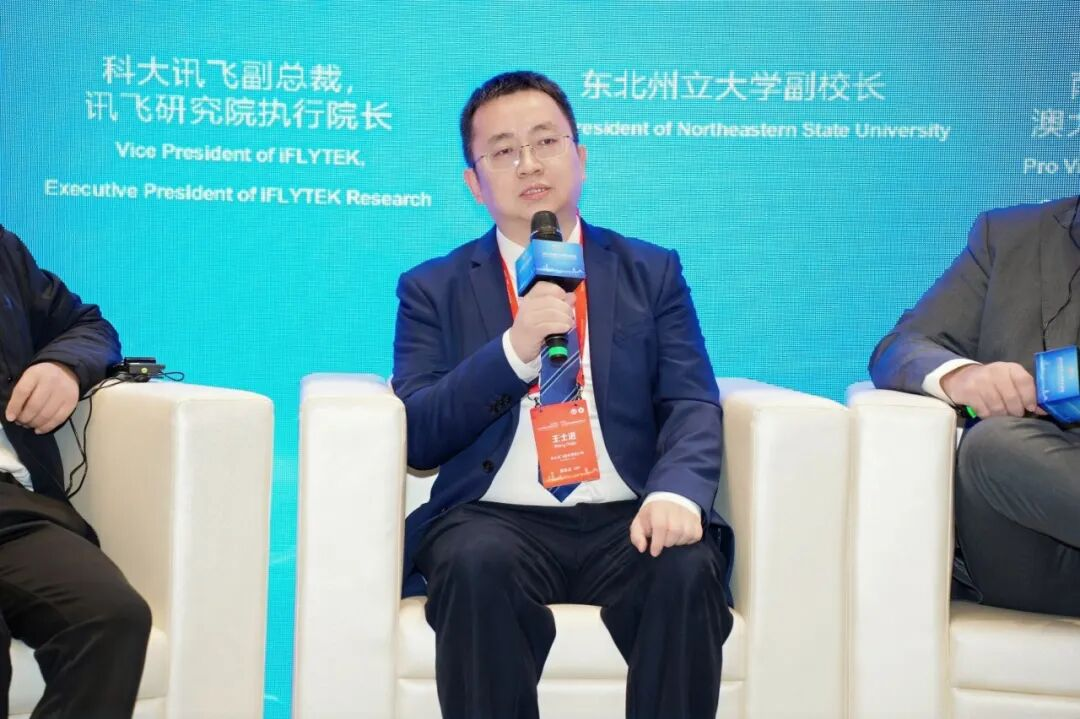
The 2025 edition of WUPF was fully supported by iFLYTEK's Deepting simultaneous interpretation services, providing robust technical assurance for the forum's smooth and efficient communication. As one of the parallel sessions of the event, the "AI and Scientific Research Paradigms Shift" session gathered global elites from the education and technology sectors. They engaged in extensive discussions on AI-era research paradigms and discipline development models in higher education, comprehensively exploring diverse pathways for AI-driven digital transformation in education and the evolution of research paradigms. Moving forward, iFLYTEK will continue to collaborate with global higher education institutions, deepening industry-academia cooperation to jointly cultivate new talent equipped with both AI literacy and humanistic values, thereby helping to build a new global higher education ecosystem marked by digital empowerment, cross-sector collaboration, and interdisciplinary integration.
More News
-

 AI Empowering Bilingual Communication | Campus Tour Launches for the 4th Global Youth Bilingual Broadcast Announcing and Anchoring Contest
April 02, 2026
-
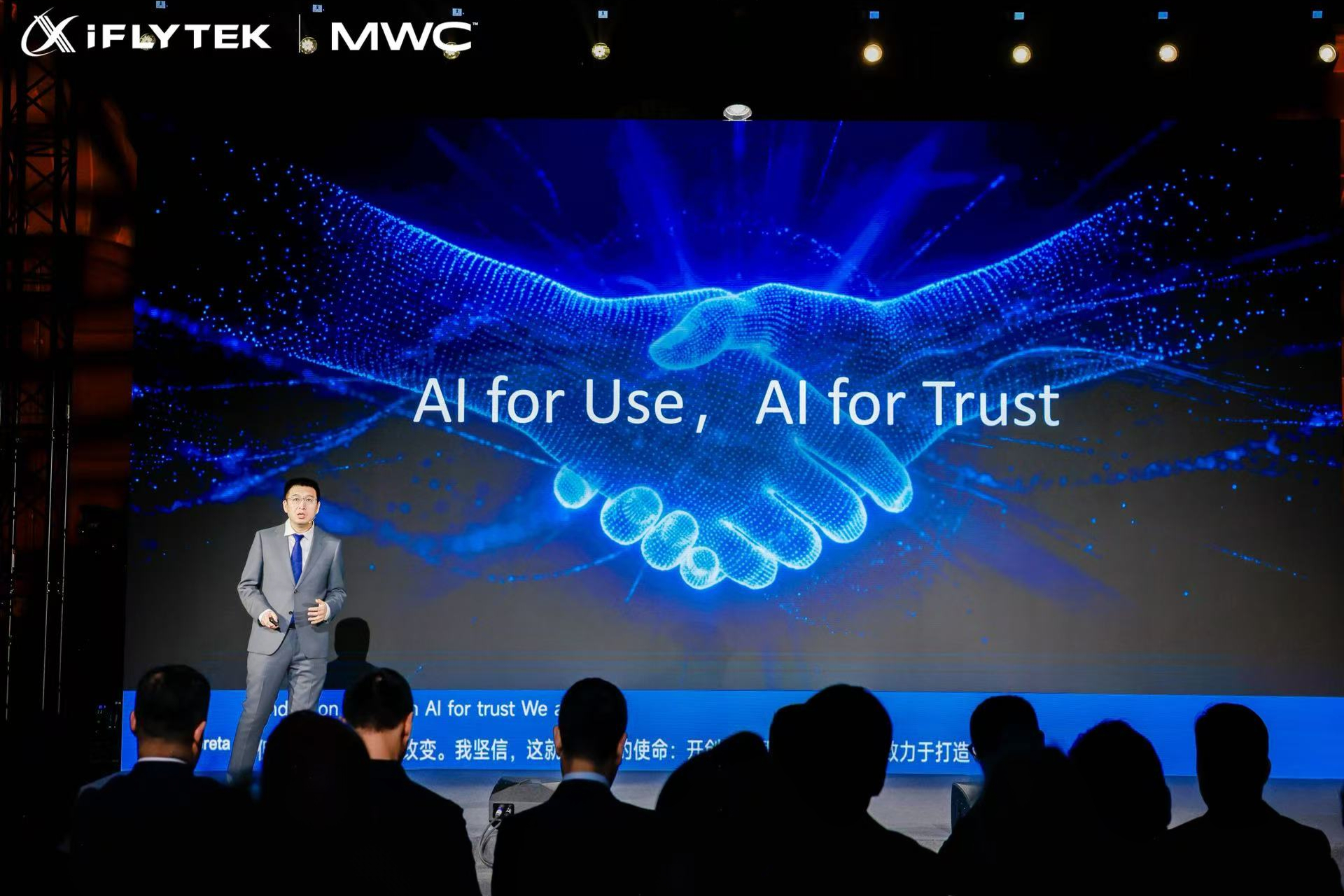 iFLYTEK Debuts AI Glasses and New AI Devices at MWC26, Advancing "AI for Use, AI for Trust"
March 05, 2026
-
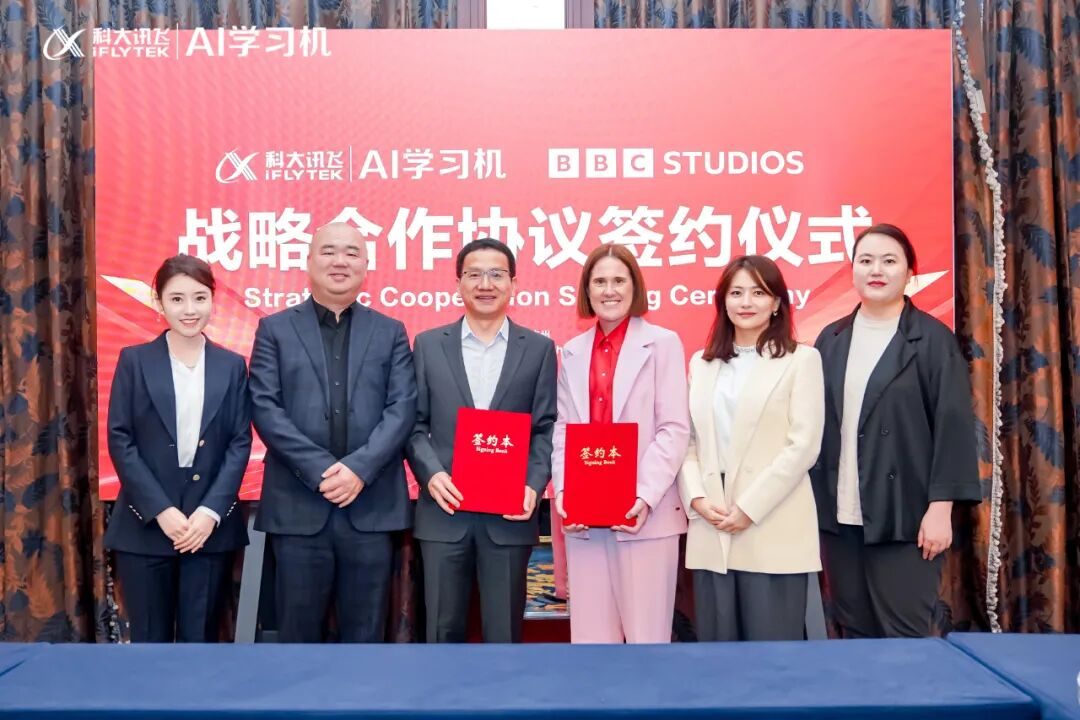 Industry First: Bluey and Other Classic English Animations Launch Exclusively on iFLYTEK AI Learning Machine
January 14, 2026
-
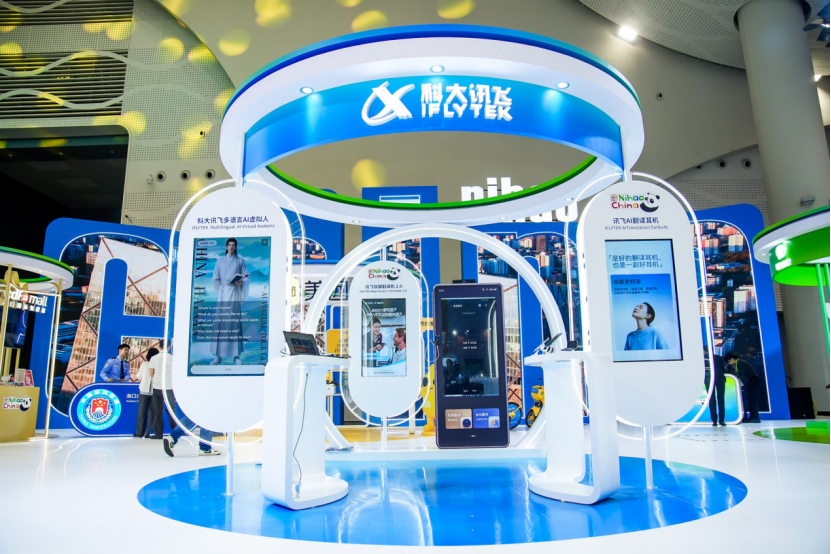 iFLYTEK Showcases at the 2025 China International Travel Mart
January 08, 2026
-
 iFLYTEK Upgrades Simultaneous Interpretation Model and Launches iFLYTRANS Headsets in Shanghai and Dubai
October 31, 2025
-
 Spotlight on DMEXCO 2025: Join iFLYTEK AI Marketing to Shape the AI-Driven Future of Digital Marketing
October 22, 2025